 in collaboration with

Everymind at Work's Mental Health Support App
A workplace mental health support app with personalised resources, developed with Planes using React and React Native.
Technologies
React (web)
React Native (mobile)
AWS
PostgreSQL
Node.js
Prisma
Vercel
Custom CMS
Video delivery
Services
Software Engineering
Links
Engineering Wellness: Dale Digital & Planes
Introduction
Paul McGregor, a renowned mental health speaker and advocate, had a vision for a product that could revolutionise workplace mental health support. He conceived 'Everymind at Work' (or 'Everymind'), a mobile app that could impart his extensive knowledge and facilitate life-saving conversations at scale. To breathe life into this vision, he engaged Planes, a versatile micro-agency, and myself to engineer the platform.
The Challenge
The primary challenge was to create a Minimal Viable Product (MVP) that encapsulates Paul's expertise in a user-friendly format. The app was to serve as a content platform, providing videos and blog articles to help users with their mental health. It needed to tailor the content presented to each user based on their individual mental health needs, identified through a series of questions.
My Role
As the sole engineer on the project, my role was to transform the third-party design into a functional application. Working alongside the product manager from Planes, we focused on crafting a seamless user experience that reflected the app's purpose and values.
The Strategy
Our strategy centred on the user. We used React Native to develop the application, taking advantage of its cross-platform capabilities and performance.
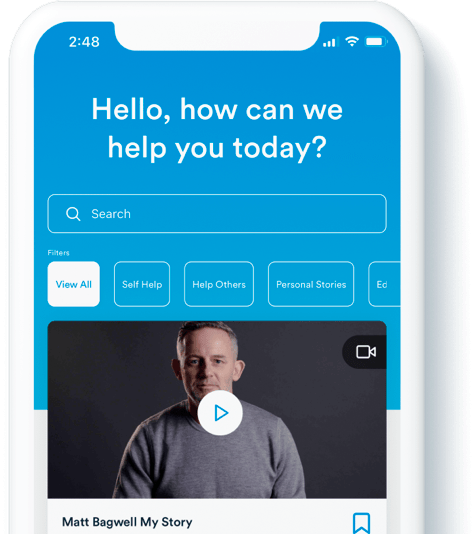
The MVP was designed to include a feed feature that personalised content for each user. After answering a series of mental health-related questions, users would receive a curated selection of videos and articles specifically targeted to their individual needs.
The Product
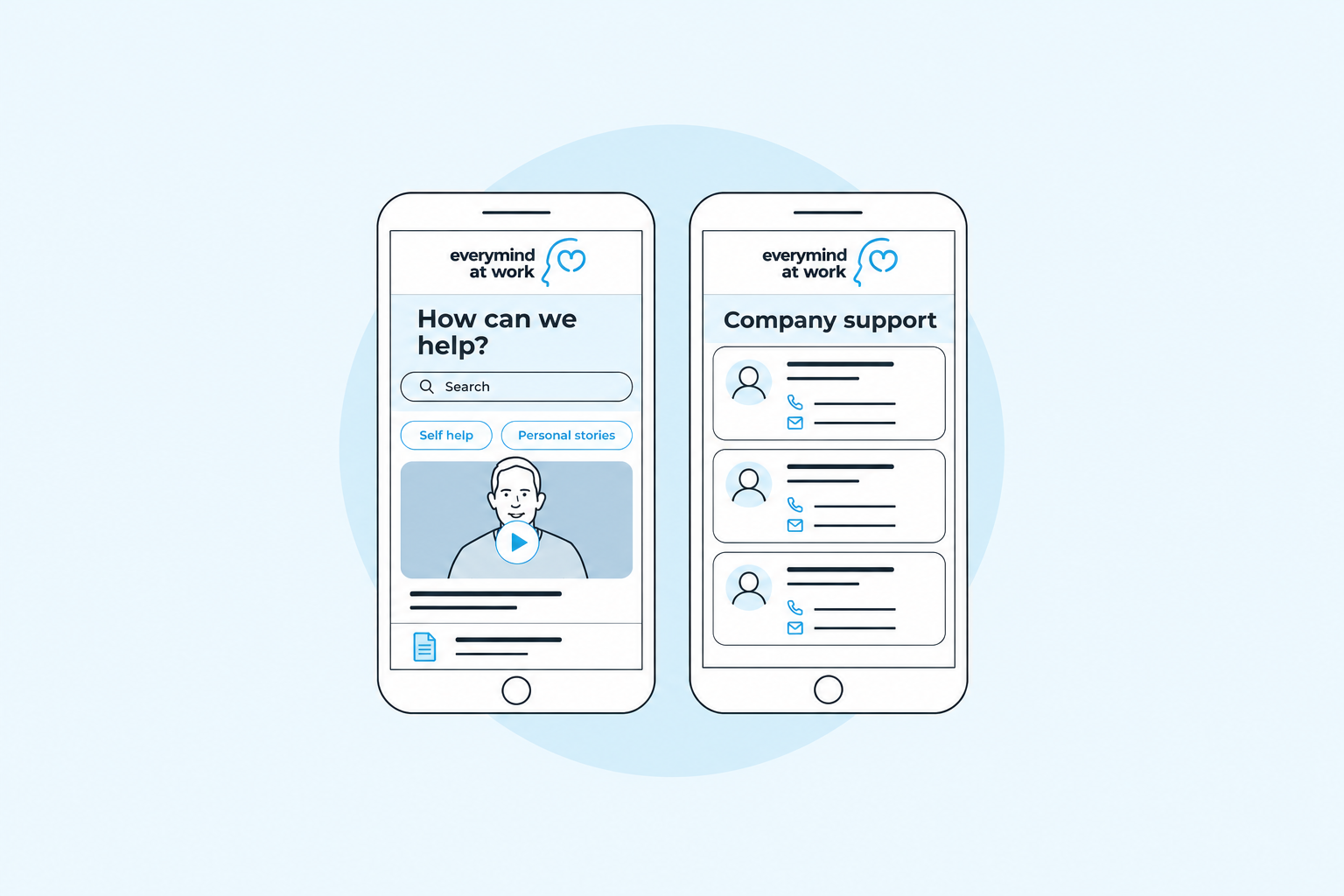
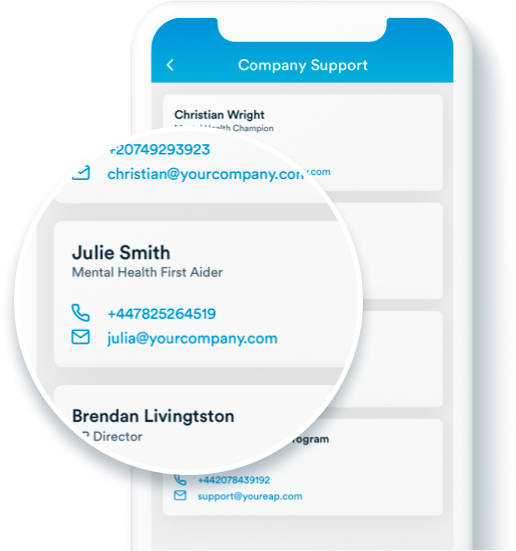
The goal was to build a self-service hub for employees to access mental health resources and tools.
Diagnostic Survey Tool: Upon onboarding, and at various intervals, users are asked questions to determine where they are in their mental health journey. The results of the diagnostic are used to curate content for the personalised feed.
Custom CMS: A place to store content that will be delivered to users of the platform. This included videos, podcast episodes, and written content.
Personalised feed: A dynamic feed designed to provide the right content at the right time.
The Development Process
Sprint Planning: To optimise the flow of work, we used a sprint methodology. In each sprint, usually lasting 2 weeks, we planned the next product increment, defining what features to develop and what issues to tackle.
Design Process: Paul’s designer used Sketch and Zeplin, a UI design tool to create static mobile app screen designs and a developer-handoff tool for ease of communicating design specifications into code.
Development Process: I worked closely with the Planes Product Manager to ensure each feature built during the sprint worked as designed, and define solutions for some of the finer details.
The Results
The launch of the MVP was a landmark event, marking the successful translation of Paul's vision into a practical, impactful tool. Within just three months, we built and launched an application that not only embodied Paul's expertise but also provided a personalised, targeted mental health support system for users.
The launch allowed Paul to fulfil a significant B2B pre-sale, opening the door to further sales and the subsequent growth of a team and company around the Everymind product and service.
Engagement
I worked on this project through Planes during a series of contracts between August 2019 and April 2022. Individual contracts lasted between three and nine months; this range describes the wider Planes engagement rather than the dates of this project.